Airstrikes in eastern Afghanistan destroy Islamic State radio station

American and Afghan officials say airstrikes on a remote eastern region of Afghanistan have destroyed a radio station operated by the Islamic State group.

 An official with the US military said today the strike had destroyed “Voice of the Caliphate” radio operated by IS near the border with Pakistan.

He spoke on condition of anonymity because he was not authorised to speak to media on the subject.

In an official statement, US Army Col Mike Lawhorn, spokesman for the US-NATO mission in Afghanistan, said “two counter-terrorism airstrikes took place in Achin district” in Nangarhar province yesterday.

Lawhorn had no further details.

The Islamic State group emerged in Afghanistan in the past year. The radio station was broadcasting illegally across Nangarhar, in an attempt to boost recruitment.


Two more sentenced to death for Bangladesh war crimes

A Bangladeshi tribunal sentenced two former pro-Pakistan militia fighters to death Tuesday for war crimes during the country`s 1971 independence conflict.

Lawyers for 66-year-old Obaidul Haque and Ataur Rahman, 62, immediately announced that they would seek to overturn the ruling by the International Crimes Tribunal.

It has so far convicted two dozen people of atrocities in the brutal conflict, in which what was then East Pakistan broke away from the rest of the country to become Bangladesh.

Both men were convicted of killing seven people and raping a woman in the northern district of Netrokona and of torturing six others to death after abducting them.

A total of 23 prosecution witnesses had testified against the pair since charges were laid against them last year.

Prosecutors had told the tribunal that Haque was not only one of the leaders of a pro-Pakistani political party in 1971 but also a head of a militia group behind a series of brutal attacks on civilians.

Rahman was accused by witnesses of being a member of the same militia.

“We will challenge the verdict with the Supreme Court and hope our clients will be proved not guilty and be acquitted,” defence lawyer Gazi Tamim told reporters after the sentence was handed down.

Twenty-four people have so far been convicted of war crimes by the tribunal, a domestic court which lacks international oversight.

Most of them were senior figures in Jamaat-e-Islami, the country`s largest Islamist party. Three of the Jamaat leaders have so far been executed, along with a senior leader of the main opposition Bangladesh Nationalist Party.

Previous convictions and sentences from the tribunal have triggered deadly violence, with some 500 people killed, mainly in clashes between opposition activists and police over the last three years.

The government of Prime Minister Sheikh Hasina maintains the trials are needed to heal the wounds of the conflict. But the opposition say they are an attempt to eradicate its leadership.


Terror groups backed by Pakistan carried out Bacha Khan University massacre

Great-granddaughter of Khan Abdul Ghaffar Khan aka Bacha Khan has accused Pakistan’s homegrown terror groups of carrying out dastardly attacks on the university, killing 21 innocent people.

 Yasmin Nigar Khan – head of All India Pakhtoon Jirga-e-Hind – opines that since Frontier Gandhi (as Bacha Khan was popularly known as) was a respectable figure in Afghanistan also, so terrorists from there would not assault anything named after him.

“It’s unbelievable that any Afghan would attack a university that is named after Khan Abdul Ghaffar Khan. So the popular notion that Tehrik-e-Taliban is responsible for the attack on the Bacha Khan University is a cooked up story,” Yasmin told Hindustan Times.

She further told HT that Taliban also did not carry out Peshawar school attack which claimed the lives of 150 people dead.

“The Pakistani government and terrorist outfits supported by Pakistan are responsible for both the attacks. They have a dual mission: first to vitiate the minds of the Pakhtoons from the North West Frontier Province of Pakistan against the Afghans because Afghanistan is supporting the cause of an independent Pakhtoonistan,” she said.

“Second, Pakistan wants public sentiments to be (once again) in its favour after the recent attack on the Pathankot airbase by terrorist outfits from Pakistan,” she added.

42-year-old Yasmin has never been to Pakistan as she fears she would be arrested for her open support to independent Pakhtoonistan.


Pakistan university attackers vow to target schools in new video

The Taliban faction behind a massacre at a university in northwest Pakistan this week issued a video message Friday vowing to target schools throughout the country, calling them “nurseries” for people who challenge Allah`s law.

The video, which spread rapidly on Facebook but was not released on official media accounts for the Tehreek-e-Taliban Pakistani (TTP), shows Khalifa Umar Mansoor, whose faction claimed responsibility for the attack on Bacha Khan university Wednesday.

Heavily armed gunmen stormed the campus in Charsadda in northwest Pakistan, killing 21 people in an attack that had chilling echoes of a 2014 assault on a school in nearby Peshawar, also claimed by Mansoor`s faction.

The rampage threatened to shatter the sense of security growing in the troubled region a year after the Peshawar attack, which left more than 150 people dead — mostly children.

In the video issued Friday, Mansoor said his faction had attacked the university “because this is the place where lawyers are made, this is the place that produces military officers, this is the place that produces members of the parliament, all of whom challenge Allah`s sovereignty”.

Instead of targeting armed soldiers, he said, “we will target the nurseries that produce these people”.

“We will continue to attack schools, colleges and universities across Pakistan as these are the foundations that produce apostates. We will target and demolish the foundations,” he said.

Mansoor issued a similar video in the wake of the Peshawar attack on December 16, 2014, Pakistan`s deadliest ever extremist assault.

He said schools like the one in Peshawar, which is some 50 kilometres (30 miles) from Charsadda, were “preparing those generals, brigadiers and majors who killed and arrested so many fighters”.

“If our women and children died as martyrs your children will not escape. If you attack us we will take revenge for the innocents,” he said in the video message, also posted online.

Analysts have said the Taliban sent a message of impunity with Wednesday`s attack, that a national crackdown on extremism has failed and they can hit targets at will.

The TTP, an umbrella group, has officially disavowed the Bacha Khan attack, branding it “un-Islamic” and vowing to hunt down those behind it.
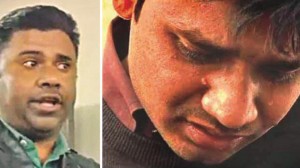


Pakistan, Afghanistan need to work together to tackle Taliban: White House

Pakistan and Afghanistan need to work together to effectively overcome the Taliban challenge, the White House said, a day after the militant group massacred 21 people, mostly students, at a popular Pakistani university.

“The conclusion that we’ve drawn here is…that the Taliban poses a security threat to both countries, and that the nations of Afghanistan and Pakistan are going to be able to more effectively confront that threat if they’re able to more effectively cooperate,” White House Press Secretary Josh Earnest told reporters yesterday.

Earnest said the US has long been supportive of the reconciliation process between the Afghan government and the Taliban. He said the US is hoping to facilitate better co-operation between the two South Asian neighbours.

As part of that role, US Vice President Joe Biden held a tri-lateral meeting with Afghan President Ashraf Ghani and Pakistan Prime Minister Nawaz Sharif in Davos yesterday to discuss the recent reconciliation efforts.

During the meeting, Biden reaffirmed US support for reconciliation and improved bilateral ties between Afghanistan and Pakistan. “Any sort of decisions about how the continuation of those talks and any sort of agreement that could be produced by those talks about whether or not that’s in the interest of those countries to pursue — those are decisions that will be made by the leaders in those two countries, as it should be,” he said.

But the US will continue to play the role that it has played for some time now in supporting reconciliation talks that are led by those individual countries, he added.

Pakistan, Afghanistan, China and the US have called on all Afghan Taliban groups to start talks with Kabul to find a political solution to the long-running conflict in the war-torn country.

On Wednesday, heavily-armed Taliban militants stormed the Bacha Khan University, named after the iconic Khan Abdul Ghaffar Khan, in Pakistan’s Khyber-Pakhtunkhwa province and opened fire on students and teachers, killing 21 people.


'15th Amendment a conspiracy to establish one-party system'

The 15th Amendment to the constitution is a high-level conspiracy to establish a one-party state, the BNP alleged on Thursday.

“Chief Justice ABM Khairul Huq helped the government move toward a one-party system through the 15th amendment to the constitution. It was a naked conspiracy at the highest level to move forward on a one-party ruling system.

“This has been made clear before the public again by incumbent chief justice SK Sinha,” Ruhul Kabir Rizvi, joint secretary general of the party, told journalists at a press briefing at the party’s Nayapaltan headquarters.

“Khairul Huq took Tk10 lakh from the prime minister for his treatment and to get the law commission chairmanship. He wrote the verdict and signed it after his retirement,” Rizvi alleged.

Chief Justice SK Sinha recently said: “Some judges take a long time to write their judgements. Others continue writing their verdicts even after retirement, a practice that is against the law and the Constitution.”

Sinha said a judge is an ordinary citizen after retirement.

“Court papers are official documents. A judge loses his authority to keep them, review them, prepare judgements and sign on them after retirement,” he said.


HC stays Kalyanpur slum eviction

The High Court has issued a stay order on the eviction of Kalyanpur slum for three months.

The bench of Justice Tarikul Hakim and Justice Bhismadev Chakrabarti passed the order following a writ petition filed by Ain O Shalish Kendra on Thursday afternoon.

The court also issued an order asking the authorities not to harass or arrest the slum dwellers without any specific reason.

Tension mounted at Kalyanpur slum as the National Housing Authority started eviction drive on Thursday morning.

Agitating slum dwellers were seen protesting in the area with sticks to bar the drive. Thousands took position on the streets after their slums were demolished.

Later, with the help of police, Executive Magistrate Nur Alam started the drive again around 12 noon.

The slum dwellers pelted brick chips at police when they tried to evict the 4 no slum around 1:45pm, forcing the law enforcers to retaliate.


SC stays case filing against torturer cop Masud

The Supreme Court today stayed a High Court order that directed police to file a case over cop torture on Bangladesh Bank official Golam Rabby.

Chamber judge of the Appellate Division Justice Hasan Foyez Siddique ordered the stay until January 25 and sent it for a full bench hearing on that day.

The High Court observes that sub-inspector Masud Shikder has committed a criminal offence by detaining and torturing bank official Golam Rabby.

The High Court observes that sub-inspector Masud Shikder has committed a criminal offence by detaining and torturing bank official Golam Rabby.

His order came following a petition moved by the government seeking a stay on the High Court order, which had said that the torturer cop should be dismissed.

Masud, formerly a police sub-inspector of Mohammadpur, drew widespread flak after torturing Bangladesh Bank official Golam Rabby and asking for Tk 5 lakh bribe from him.

READ MORE: Tortured BB official recalls cop brutality

The policeman threatened to implicate the bank official in a narcotics case, kill him and frame him as a victim of a shootout if he failed to pay the bribe.

Following countrywide outrage after the incident, the policeman was first closed and later suspended. A writ petition was moved with the High Court in this regard.

The High Court had directed Mohammadpur police to record Rabby’s allegation as an FIR in response to the writ petition. The court observed that Masud should be dismissed.

AKM Ehsanur Rahman, one of the writ petitioners, told The Daily Star that the police cannot lodge a first information report (FIR) over torture on Golam Rabby until January 25 after the chamber judge’s order.


Kerala beedi baron Nisham sentenced to life, fined Rs 80 lakh

Muhammad Nisham, a beedi tycoon had rammed his Hummer SUV into a security guard leading to the latter’s death two weeks later

A court in Thrissur on Thursday sentenced beedi tycoon Muhammad Nisham to rigorous life imprisonment and another 24 years in jail for causing the death of a security guard with his Hummer at the Sobha City apartments last year. The 39-year-old businessman, reportedly with assets worth Rs 5,000 crore, will also have to pay a fine of Rs 80.30 lakh of which Rs 50 lakh is to be paid to the widow of the victim, K Chandrabose.

Quoting the verdict of judge K P Sudheer, special public prosecutor C P Udayabhanu said the life term served for murder and 24 years of jail term for other six offences would run consecutively. The appellate courts have to uphold the quantum of punishment.

Nisham was convicted under sections of 302, 326, 323, 324,427,449 and 506(1) of IPC.

The court also asked the prosecution to initiate criminal procedures against Nisham’s wife Amal on charges of perjury. Amal, who had been a prosecution witness, had earlier given a statement to the magistrate that she had seen injured Chandrabose in the Hummer SUV of her husband. Later, during the trial, Amal turned hostile.

Reacting to the verdict, Chadrabose’s wife Jamanthi said the culprit should have been hanged. “We did not get justice. We are not enthused to hear about the compensation ordered to be paid to us. It was not an accident. He ran the vehicle into my husband. When he tried to escape, Nisham crushed him against a concrete wall using his vehicle. We are not satisfied by the verdict,’’ said Jamanthi, who was given the job of a lower division typist with a public sector firm in Thrissur after Chandrabose’s death.

Nisham’s family members also said they would move an appeal in the High Court as the trial court did not look into the attack against Nisham.

Home Minister Ramesh Chennithala said the prosecution was asked to move an appeal seeking maximum punishment for the culprit.

This has been one of the most sensational cases in Kerala in recent years. Nisham is the managing director of Tamil Nadu-based King Beedi Co. Apart from being a prominent tobacco supplier, he had business interests ranging from a hotel in Dubai to jewellery businesses in the Middle East and Kerala (King’s Jewellers in Triprayar, Thrissur) to real-estate. He owned a fleet of 18 imported cars, including Bentley, Rolls-Royce, Aston Martin, Road Ranger, Ferrari and Jaguar. Nisham had faced several traffic offences connected with these massive vehicles.

However, Nisham’s return from a late night party in Thrissur to his apartment at Sobha City on the night of January 29, 2014 in his Hummer SUV was the beginning of the fall of the powerful businessman. Nisham rammed his SUV into Chandrabose and pinned him against a concrete wall, reportedly over a delay in opening the gates of Sobha City.

After ramming him against a wall, he dumped Chandrabose at the back of the Hummer and drove to the parking area of the apartment complex, where he further assaulted him. Nisham prevented others from taking the victim to the hospital. Later, the police, who reached on being alerted by the Sobha City staff, rushed Chandrabose to Amala Hospital in Thrissur where he died two weeks later. Nisham was then charged with murder.

The attack leading to the security guard’s death exposed the criminal history of Nisham, who had allegedly been involved in 11 cases, but managed to escape prosecution. He had enjoyed clout among leaders of all political parties and police officials.

While an undertrial in the murder case, Nisham was listed as a goon after the state police slapped relevant sections of the Kerala Anti-Social Activities Prevention Act. Accordingly, he was consigned to jail without any trial for six months.

Nisham moved a bail plea in the Supreme Court which was rejected with the court observing that the case showed the rich were becoming egocentric.

When the trial began, prime prosecution witness K C Anoop, a colleague of Chandrabose, turned hostile. He said he had not seen Chandrabose being hit by the vehicle driven by Nisham. The statement triggered a ruckus, forcing Anoop to correct it. When the trial resumed, Anoop told the court that he had diluted his statement under duress from Nisham’s family, and went back to the original version in which he said he had seen Chandrabose being attacked by Nisham.

The case also triggered ripples in the police department. Former Kerala DGP K S Balasubramaniam faced allegations that he tried to protect Nisham. Then Thrissur city police commissioner Jacob Job was suspended for a secret meeting with Nisham.


Putin Probably 'Approved' Ex Spy's Assassination

President Vladimir Putin probably approved a plan by Russia’s FSB security service to kill former agent Alexander Litvinenko, a British judge said today.

In a lengthy report, Judge Robert Owen said that he is certain Litvinenko was given tea laced with a fatal dose of polonium-210 at a London hotel in November 2006.

He said there is a “strong probability” that the FSB directed the killing, and the operation was “probably approved” by Putin.

Litvinenko, a former FSB agent, fled to Britain in 2000 and became a vocal critic of Russia’s security service and of Putin, whom he accused of links to organized crime.

Owen said Litvinenko “was regarded as having betrayed the FSB” with his actions, and that “there were powerful motives for organizations and individuals within the Russian state to take action against Mr. Litvinenko, including killing him.”

Moscow has always strongly denied involvement in Litvinenko’s death, and Russia refuses to identify the two main suspects, Andrei Lugovoi and Dmitry Kovtun.

Litvinenko, who had become a vocal critic of Russian President Vladimir Putin, died after he was poisoned with polonium-210, an isotope that is deadly even if ingested in tiny quantities.

He had fled from Russian to Britain in 2000 after breaking with Putin and his inner circle.